Episode Transcript
[00:00:00] Ariana Drummond: Everyone knows what's going on in the industry, the Emmys, the Golden Globes, and how our community is not acknowledged for the work that they're doing. Even if they are nominated, they're still not winning. The Image Awards was created for that reason. Some people refer to the Image Awards as a family reunion. So it's those moments that don't happen in other places that because of the naacp, it happens.
[00:00:24] Robin Harrison: The NAACP Image Awards is more than a show. It's the visible celebration of a larger mission for advocacy and representation.
It's an extravagant night full of awards and performances, big names and big projects. But have you ever wondered how it all comes together?
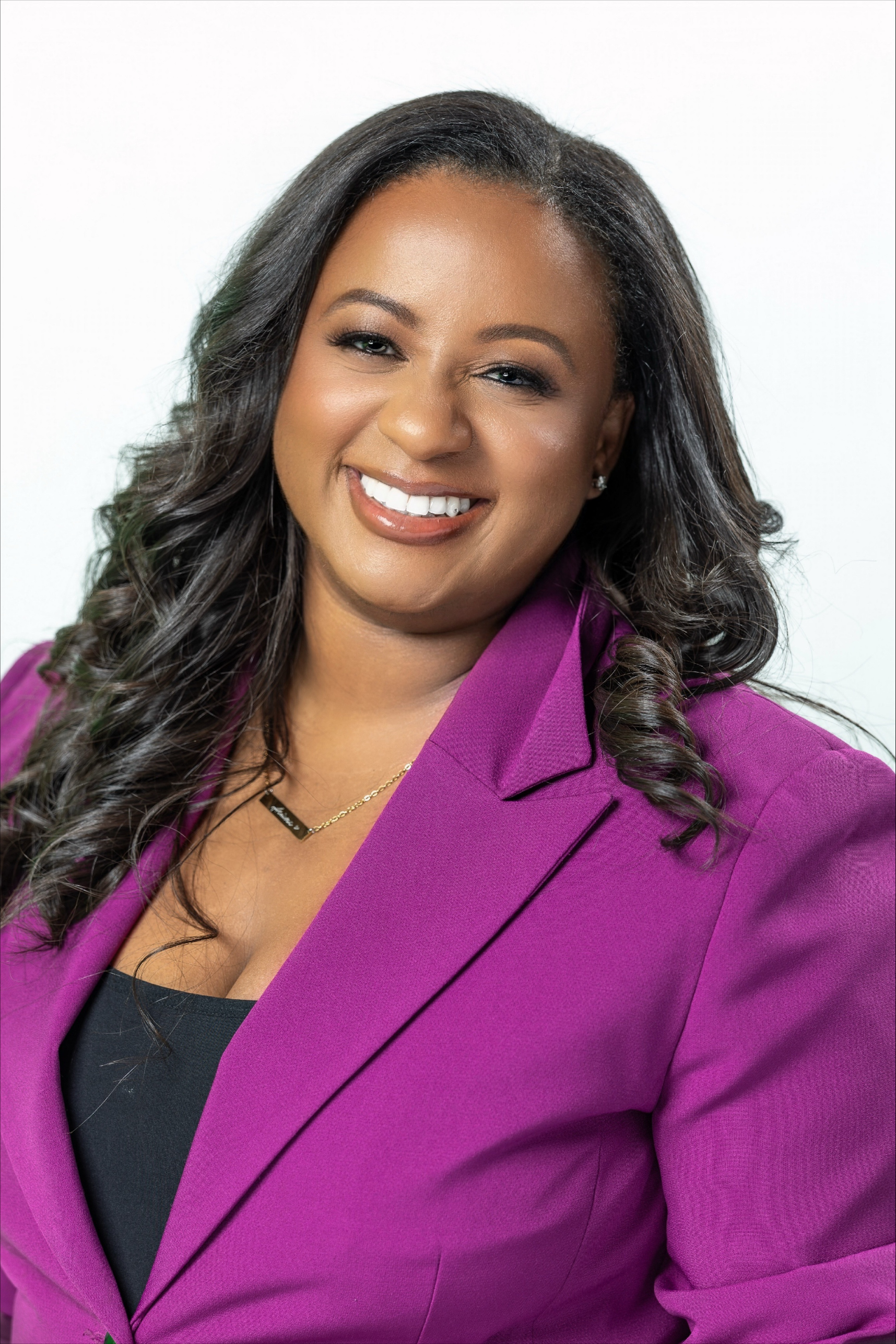
Today we're joined by none other than Robin Harrison, Vice president of the NAACP Hollywood Bureau. From submissions to Awards Night, Robin shares the inside scoop and reinforces why Image Awards is still relevant after 50 plus years. She also shares more about the Hollywood Bureau and its active programs that provide resources for creators of all kinds of staying true to its mission of advocacy and advancement. I'm your host, Arianna Drummond. Welcome to NACP Inside the Industry.
Ms. Robin Harrison. Thank you so much for joining us today for NAC Inside the Industry. How are you feeling today?
[00:01:17] Ariana Drummond: I'm feeling great, Arianna. Thank you for having me.
[00:01:19] Robin Harrison: So as one of the producers on the show, you are now sitting opposite of me in this seat. How does it feel?
[00:01:25] Ariana Drummond: A little nervous. I'm usually behind the scenes. I'm not a person who's out front. That's what a producer does.
[00:01:31] Robin Harrison: Well, first time for everything and you are gonna absolutely kill it. So let's get into this. You ready?
[00:01:35] Ariana Drummond: I'm ready.
[00:01:36] Robin Harrison: Okay, stay ready, stay ready. So don't have to get ready.
[00:01:39] Ariana Drummond: It's true.
[00:01:41] Robin Harrison: No. Wise advice, Wise advice. So I feel like a lot of people know Image Awards as this night of black excellence, but a lot of people don't know the work that actually goes on behind the scenes. It takes a lot of work. I've been knowing you for 10 plus years and I've gotten to see the good, the bad, the ugly. So with the 58th soon approaching, what are you most looking forward to?
[00:02:03] Ariana Drummond: The 58th, I cannot believe it has been. I've been working on Image, I think 22 years now, and it has changed so much since I started.
And I would say that the biggest change and the thing that I'm looking forward to the most is we now celebrate image over a week. So it's literally called Image Awards week. And it kicks off the Monday before the show.
And so there's Just a host of events and activities that happen that celebrate our excellence and people of color in the entertainment business.
[00:02:36] Robin Harrison: I love that. And we're gonna actually get deep into the week of events and all the events that we have to offer. But what has been the most interesting part of this process so far for you?
[00:02:48] Ariana Drummond: So I remember When I started 20 years ago, the process of submissions. People don't know that.
That it's just not that week of events or the show itself, but it actually kicks off with submissions. And that's the process of soliciting the networks and the studios and the labels and the publishers to submit their projects. And when I started, we used to do this manually. It was cold. Calling people, filling out a paper form, emailing the form in, mailing the form in, and then having to translate all that information into an Excel spreadsheet.
[00:03:29] Robin Harrison: That's great.
[00:03:30] Ariana Drummond: That we would then email to the committee to review and sometimes print it out.
So the thing that I'm looking forward to, the thing that has changed the most, is the submissions process. And just to see how we have improved on it, how we've automated it, how it's easier for the submitter as well as the committee members to reviewing the projects that are submitted. So it's. I know it's people like submissions. I'm like, yeah, that's the first part of the whole process. And that is the biggest change we've had.
[00:04:01] Robin Harrison: And we're going to get into things. All submissions. I know everybody has a bunch of questions for you that they'd probably like to be asked, but many people don't know that you are literally the woman behind it all.
From vision to production to execution.
You sit at the intersection of the Hollywood Bureau and the Image Awards. If you could explain in, like, layman's terms exactly what would you do or what you do, what do you think is your role?
[00:04:29] Ariana Drummond: So I work for the naacp, obviously. And the office that I am, I work in is the NACP Hollywood Bureau. And so the Hollywood Bureau has two functions. One, advocacy and outreach within the entertainment industry, and then the oversight of the Image Awards. And so the Image Awards portion includes submissions, the nominating committee, the selection of the nominees, producing the events, working with the production production company, trophies, just anything and everything that has to do with the award show, this office is responsible for it in partnership with other departments within the organization. I certainly don't want anybody to think that we are. You know, we have a staff of six people, but it takes hundreds to produce image. From the submissions process to the after party the night of the show.
[00:05:22] Robin Harrison: As you mentioned, you've been working at this organization for 20 plus years.
I've seen you working, I've seen you leading, I've seen you excelling in so many different capacities here at Hollywood Bureau, NAACP Image Awards. Just tell us a little bit about how you got your start in this organization.
[00:05:40] Ariana Drummond: Oh, that's a story. It's a very long story, but I'll keep it short.
It was over 20 years ago I started.
My background is event production and I was based in D.C. and the woman that I worked for, her name Yolanda Caraway, got the contract to do the Image Awards.
So we were living in D.C. we would come out every year to produce the Image Awards. My first role was to do sponsorships, so I was responsible for raising money.
The second year, I was responsible for raising money and producing the events. The third year, the NAACP offered me a full time job and asked me to come in house and turn that contract into my salary. And I have been here ever since. And I absolutely love what I do. And going from sponsorships to events to the full production is.
It's a dream and I love it. I love that that's how I got here.
[00:06:34] Robin Harrison: And you've touched like literally every kind of industry or facet of not only Image Awards, but Hollywood like is, do you have a favorite?
Do you miss doing sponsorships? Do you miss doing any of that?
[00:06:45] Ariana Drummond: Well, I still do it.
[00:06:47] Robin Harrison: That's true. You do.
[00:06:48] Ariana Drummond: I do everything. A little bit of everything. People joke about how do you know so much stuff? But you know, working at a nonprofit and even a small agency, you have to be very talented and be able to do multiple things. And I had my own business prior to coming into the association where I was producing events and I was a graphic designer. People are like, you were a graphic designer. But that's why I have a certain eye and I can see certain things and do certain things because of all of the things that I've done that have brought me to this point. And why, I think, not why I think, but why I know that the Image Award and Image Awards week is where it is and why it's even going to be better as we continue
[00:07:29] Robin Harrison: so talking about Image Awards. Why do you think it's so important for us to have this type of award show?
[00:07:36] Ariana Drummond: So I think, you know, everyone knows what's going on in the industry recently with the Emmys, the Golden Globes, and how our community is not acknowledged for the work that they're doing or even if they are nominated, they're still not winning. And the Image Awards was created for part of the. For that reason.
It was created in the early 60s by the NAACP Beverly Hills Hollywood branch.
And they started the Image Awards because they weren't being acknowledged and recognized at other award shows. So we created our own show to recognize the people of color, recognize ourselves.
And that is still what's happening today.
[00:08:20] Robin Harrison: Yeah. And what makes this different from other
[00:08:22] Ariana Drummond: award shows, the biggest piece is that we just don't focus on one genre. So we have television, music, film, podcast, literary.
And so those are the. I guess that's what makes us really different because we celebrate all of those different genres and areas of discipline within our one award show.
[00:08:43] Robin Harrison: I know you've mentioned before that what also makes us different is the fact that we're a nonprofit first, but we also have an award show. So.
[00:08:52] Ariana Drummond: Well, that makes us absolutely different because most other award shows were created and then they created a nonprofit. We are, in fact, a nonprofit that created. That created an award show. And we created that award show so that we could honor ourselves again, not being recognized within other award shows and programs that we had to create our own.
And that was, you know, 60 something years ago.
[00:09:15] Robin Harrison: So earlier you talked a lot about the submission process, and I feel like every year we get hit with the same question. What qualifies? What are the deadlines?
How do I submit? So for people that are interested in submitting their projects right now, can you walk us a bit through the timeline and the guidelines for that?
[00:09:33] Ariana Drummond: Sure. So submissions is currently open.
We have a group of individuals we call coordinators that focus on the different areas within the submissions process.
You can visit the naacpimageawards.net website and get their contact information.
There's also a guidelines booklet that lists all of the categories.
It gives you all of the requirements, the deadlines, pricing. All of that information is available in the guidelines booklet, along with the information on reaching out to each of the coordinators for your particular area that you're interested in submitting.
[00:10:14] Robin Harrison: Okay, so earlier you talked a little bit about the nominating committee. What exactly is that?
[00:10:20] Ariana Drummond: So there is a committee that is made up of probably about four or 500 individuals, and they review the submitted projects and then they actually vote to determine who the nominees are.
It is not a.
It's not open to the general public to determine the nominees. We do open up the voting to determine the winners to the general public. But the nominating committee is a small group of individuals who are based in the entertainment industry. So it's made up of producers, directors, writers, as well as a contingent of individuals on the NAACP side. So it's people who are. You can work for the association, you can be on the board, you can be a partner. And so we try to keep it a balance between industry and the association to determine who those nominees are and
[00:11:08] Robin Harrison: what can somebody do to set their submission apart from everybody else. How do they get it highlighted and recognized?
[00:11:15] Ariana Drummond: Well, that's a great question and I think it's one that you should answer since you are the individual who manages our four year consideration campaign.
Ask you that question, Ariana. So if someone has a project that they would like to promote and get in front of the committee, what's the best way to do that?
[00:11:30] Robin Harrison: They can do that through the FYC program. No, we do have a four year consideration campaign program where we're able to do several different initiatives we can send out or you as a submitter can do a banner ad, email blast, do events, screenings, Q&As virtual Q& A. So there's a couple things that people should definitely look into to highlight their projects. And I think it's a great way to promote your submission.
[00:11:57] Ariana Drummond: I agree.
And you have done an excellent job in managing that program.
[00:12:01] Robin Harrison: Thank you. Thank you. It's. It's definitely fun. Have a good time doing it. Especially when it comes to the events.
[00:12:06] Ariana Drummond: Those are really nice and cool.
[00:12:08] Robin Harrison: So you talked about the submission deadlines.
Once they're closed, there's no grace period, right? Like that's it.
[00:12:15] Ariana Drummond: There is no grace period. We have a. We have only two weeks to get all of the, to verify all of the information that has been submitted and then get the ballot, the virtual ballot ready for the Nominating Committee. So two weeks. So there, there is no extension.
[00:12:28] Robin Harrison: Talk to us a little bit about what happens after the Nominating committee is done voting, what happens during that time period.
[00:12:35] Ariana Drummond: So that's usually we're going to wrap submissions early November. The committee will have two weeks to vote and it's right before the Christmas holiday.
We come back from the holiday and then we've got to prepare for the nominee's announcement. So the committee doesn't know who the winners are. I don't know who the winners are. We have an independent auditor. Yes, an independent auditor. An auditor who gets the tallies and the votes directly from our submissions team. I should say we use a company called Yangaroo and they provide them with all of the raw data and then they take that, they calculate the votes and then they provide the nominees. I'll get the list probably couple of days before we do the announcement so that we can start getting all of the information ready. There's a lot that goes into making the announcements. We've got to get creative, we've got to do to get posts ready for social. And then we actually do a.
We've done a live event, we've done a virtual event. But this year we're going to be announcing the nominees live on January 7th. So there's a lot that goes into that, getting that information ready.
But yeah, and then we'll announce on the 7th of January.
[00:13:55] Robin Harrison: I know earlier you mentioned that there are several different events or what people don't realize is there are several different events that happen leading up to the actual show. Talk to us a little bit about some of those events that happen.
[00:14:06] Ariana Drummond: Well, the events are the fun part also a lot of work. But the first official event is the nominees luncheon that actually will take place on February 6th this year it's Grammy weekend so we're expecting a great turnout and having a lot of our nominees in attendance. It's an opportunity for them all to come together. They get their nominee certificate and then we take what we call a class photo. So we have all the nominees in the room and we'll have a big old riser where they'll get up there and they'll take a picture. And then a few weeks later we go into Image Awards week and that usually kicks off on Monday or Tuesday with our.
I'm sorry, kicks off on Monday or Tuesday with our golf celebrity golf tournament. And then we'll have the short film competition also takes place. We have our nominees reception. That's going to be something new this year that we. Well, we had it a couple of years ago but we're going to bring it back. And then we have creative honors which is sort of the bigger awards dinner because we, we can't include all of the awards in the live show. We have 106 categories and we spread them out throughout the week with a virtual show, Creative Honors.
We do a few of the categories in our fashion show which is typically on that Friday. And then the live show will have somewhere between eight, six to eight of the competitive awards in addition to three, maybe four special awards. And then after the live show we have an after party just so we can let our hair down and relax. We need it kind of exhale. And then on Sunday we come back with our final event which is a youth in college brunch. It's called Young, Gifted and Black which you are one of the producers of, so thank you for that as well.
[00:15:52] Robin Harrison: I know all of these events that happen and take place during the week of Image Awards are probably all your babies. You spend a lot of time on them. But do you have a favorite during the week?
[00:16:02] Ariana Drummond: So the last couple of years, I would say the favorite event is the fashion show. It is just spectacular to see these different artists and these designers and the models. And what I love about it, it's not an event that people expect the NAACP to produce.
[00:16:19] Robin Harrison: That's true.
[00:16:20] Ariana Drummond: And I would absolutely put it up against any New York Fashion Week fashion show. It is that good.
[00:16:26] Robin Harrison: I think my favorite has been, of course, the After Party. We had Bustin Rhymes last year, and that was absolutely incredible.
It was just a beautiful moment.
[00:16:34] Ariana Drummond: Luna was good a couple years ago. Yeah.
[00:16:36] Robin Harrison: Yeah, that was dope.
[00:16:37] Ariana Drummond: That was really neo.
[00:16:39] Robin Harrison: We've had some A listers. Okay.
Most people watching this episode know the Image Awards and the red carpet and the broadcast, the winners and their speeches. But you and I both know that there's a world that happens offstage. When you're standing in the room on Image Awards night, watching everything come together, what is actually running through your mind?
[00:17:01] Ariana Drummond: Usually, it's.
I'm amazed at what we're able to accomplish with such a small crew.
I mentioned earlier that there's six people that work in this office, and we are all involved to some degree. We absolutely get support from national. We hire consultants and contractors to help pull it all off.
But it is really through this office that a lot of that happens.
And the one person that also helps us very much so is the vice chair. Her name is Karen Boykin Towns. She is the chair of the Image Awards Committee. She is a big supporter of the work that we do out of this office. And I could not have, you know, where we are. A lot has to do with her.
A lot has to do with the president of the organization who believes and invested in the Hollywood Bureau. That allows us to grow and expand.
And then, you know, again, our colleagues that help us pull all of this off. But to me, that's just the. I'm amazed at what we can do with so few people to get it done and take it to the level of where it is. I see what happens at other award shows, and I'm like, we can do that.
We can do just as good or better.
And so that is what drives me. And the decisions and the events and how they look and how we move through them.
[00:18:29] Robin Harrison: Yeah. I feel like every year we top Ourselves. It's, I mean, to your point, we're sitting there on that night and after it's all said and done, I'm like, wow, we did it again. And even better. You know, every year it gets better. And I'm like, how. And then you always say it like, how can we top next year? Like, or how can we top this year? And, and I just remember especially like last year with all the sinners campaign. I mean you see so many incredible people in the room and, and have these interactions and I feel like a lot of people are always, hey, we're. This is a community cookout where surrounded by people like us, it's, it's family. It truly is family. I remember it was like during one of the breaks and, and Ryan Coogler had came out and he was just talking to people in the hallway. Like, it wasn't like, oh, like, I'm too, like, I gotta go back to my seat. He literally sat there and spoke to so many different people, young and old, like, and he dedicated time. So I, I always think it's such an incredibly beautiful moment to be surrounded by family.
[00:19:27] Ariana Drummond: Some people refer to the Image Awards as a family reunion. And that's. Sorry, it's at the nominees luncheon, but even at the show you're absolutely right. So it's those moments that don't happen in other places that because of the naacp, it happens. People are acknowledged or nominated at other award shows. But there's something about getting that acknowledgment and that award from your own people.
Which is why that's one of the reasons why the Image Awards is so important and why we are going to be here for another 60 years, even if I'm not. But we will be.
[00:20:05] Robin Harrison: This show specifically inside the industry is all about giving back and giving resources to upcoming creatives and creators. People who are really gonna change culture as we know it. So what are some of the resources that the Hollywood Bureau specifically has to offer for amazing creatives? I know we have the Adobe program and things like that.
[00:20:26] Ariana Drummond: I mentioned earlier that there's two parts to the Hollywood Bureau. It's the advocacy and outreach. And that part of our work has grown exponentially over the last few years.
We have a partnership, which you mentioned, with Adobe for editing fellows. We have a glam squad program about hair and makeup. We've recently acquired a screening room that's being renovated. State of the art equipment that we'll be able to make available to, to filmmakers for screenings and to showcase their work. We also have a Podcast, studio, a green screen, and just different services that we can offer to filmmakers and creatives of color to help them along the way in this extremely difficult space of film and tv.
[00:21:20] Robin Harrison: So you talked a lot about not only what the Image Awards is doing, but what we're doing at the Hollywood Bureau. When you think about legacy, do you think about the visible things or the invisible work that matters to you most?
[00:21:34] Ariana Drummond: Well, I would say both.
You know, when I started, I never dreamed that the Hollywood Bureau would expand the way that it has, and we've even gone beyond that. I don't. You know, I think we need to kind of reevaluate who the. What the Bureau is and what are the services that we provide. Yeah, I mean, trying to stay current in this landscape of verticals and, you know, production. I never would dream that we are literally a. We're a production studio. You know, we're the production arm of the association. So just how we've changed and how we continue to change and the services that we can provide to this community, to the association, those are all important. And I think we are going to continue to do so.
I think one of the things that makes us and by us, the bureau, kind of stand out is that we recognize that we try to stay ahead of what's happening or not get left behind.
And again, that goes back to the president, CEO, investing in the work that
[00:22:43] Robin Harrison: we do here, but also to you, like, you know, the fact that you. I always say this. The fact that you have this foresight, you've always had this vision of, like, what's before it happens, what should we be working on next? And I also owe that to you. Like, you've done an incredible job leading the Hollywood Bureau. So that's also a testament to you.
[00:23:03] Ariana Drummond: Thank you, Arianna. I appreciate that. Of course. Thank you.
[00:23:06] Robin Harrison: And you know, I personally seen what this job has required of you. What do you think, you know, in your 20 plus years of working here has required of you that you're most surprised by?
[00:23:20] Ariana Drummond: I would say the people.
You know, working for a nonprofit is not easy.
And we work long hours.
We give 110% of who we are to this, to this organization and to this job.
Part of it is because we love it.
I absolutely believe that we all love what we do.
Otherwise we wouldn't be here.
We could all be getting paid more someplace else doing the same thing.
But it's about the association and it's about our community, and that's important to me. And I think everybody that works here sort of feels the same way. Otherwise they'd be gone.
[00:24:02] Robin Harrison: What is your hope for the future of this office?
[00:24:07] Ariana Drummond: That we continue to grow?
I believe that that leadership understands the importance of what it is we do and is investing in us.
And so that growth is not just the services that we provide, but also the people, you know, moving on, moving up and making sure that we have the resources that we need to do the job that we all love doing.
[00:24:35] Robin Harrison: And what would you say your hope is for the future of the Image Awards?
[00:24:39] Ariana Drummond: Same thing. That it continues to grow, that it is recognized as the award show that it is.
To me, it is the Oscars, it's the Emmys, it's the Grammys all rolled into one.
[00:24:55] Robin Harrison: And what is your advice? I mean, again, we talked about ways for people to highlight some of their projects, but what is a piece of advice that you have for someone that is submitting a project that doesn't think that their project is worth it, worthy enough, or can compete with some of the other, you know, studio projects?
[00:25:14] Ariana Drummond: Well, the fact that they're submitting means that they believe that they are, that they can be a nominee and ultimately a winner.
And I think that's half the battle is believing in yourself, believing in your project, but then also investing in it to lift it up. There's a lot of. There's a lot of stuff out there, and you, you know, it's your baby and you've got to invest and you've got to nourish your baby. And so the committee's got a lot of projects to look through and to review.
And whatever you can do to put it in front of them is the best way, is a potential way of getting a nomination.
[00:25:58] Robin Harrison: Has there ever been a moment when you stepped back and really took a moment to feel the impact of everything you've worked so hard for and have been working towards?
[00:26:07] Ariana Drummond: Short answer is yes, there is a moment. I've had several moments. I think each year there is a moment that I take away from Image Week that I'm amazed at what we've been able to accomplish.
One of the. Well, this is not really answering your question, but this is a moment that I will never forget.
It was probably 10 years ago and when how to Get Away with Murder was on and Asia, Naomi King had done the nominees announcement and she was nominated and she was just floating right. It's like, oh, my God, I can't believe I got nominated. And she said, my mom's going to be so surprised. And I remember saying to her, I said, well, would you like your mother to come with you. She could be our guest.
And she said, oh, my God, Really? I was like, sure. So her mother came and her mother and I just happened to be on the carpet when she hit the carpet and her mother was with her and it was like she was floating on a cloud. She just looked around like she couldn't believe the experience that she was having.
And so for me, when I do this, there's always that one moment, that one person that I say, this is why we do what we do and this is why I do what I do.
It could be at a screening, it could be at the party, it could be on the carpet, it could be during the show.
There is always one person that to me really just is like, this is why. This is why I do what I do. Yeah. And most people aren't going to have those. Those moments or they're not going to have that, you know, that they're not going to see that.
I know a lot of people depend on me and I have to make decisions rapid fire because the show must go on and stuff happens. Yeah. And you just gotta be able to respond quickly and, you know, keep it moving.
[00:28:04] Robin Harrison: So before, as always, before we wrap, I wanna play two games with you. One is inside your industry bag. As you well know, there is not exactly in a bag, but a cup. If you could kindly grab one of those prompts, read the question out loud and answer it.
[00:28:20] Ariana Drummond: Okay.
A hill you'll die on in this industry.
Hmm.
Diversity.
[00:28:32] Robin Harrison: Yeah.
[00:28:32] Ariana Drummond: You know, that is one of the reasons we're here. But we belong here. We're gonna stay here. We're not going anywhere.
And the services that this office provides is part of that hill. Yes, it is the hill.
[00:28:45] Robin Harrison: Yes. Would you say it is the hill?
[00:28:48] Ariana Drummond: Yeah.
[00:28:48] Robin Harrison: I just want to first and foremost a give you your flowers. You've done an incredible job leading this team. But also just thank you for coming on and sharing your personal journey, sharing information to our viewers that are interested in submitting. And thank you so much for being here today.
[00:29:04] Ariana Drummond: Thank you so much for having me, Arianna. And thank you to the Hollywood Bureau team.
I am not one person. I do not do it alone.
So it is because of you guys and the support we get from national and our co workers that makes this happen.
[00:29:18] Robin Harrison: I hope you enjoyed today's episode.
No matter where you are in your journey, we're here to be a resource. If this conversation sparks something special for you, make sure to like, subscribe and share and drop a comment letting us know what conversations you'd like to see next. I'm your host, Arianna Drummond. See you inside the industry.